
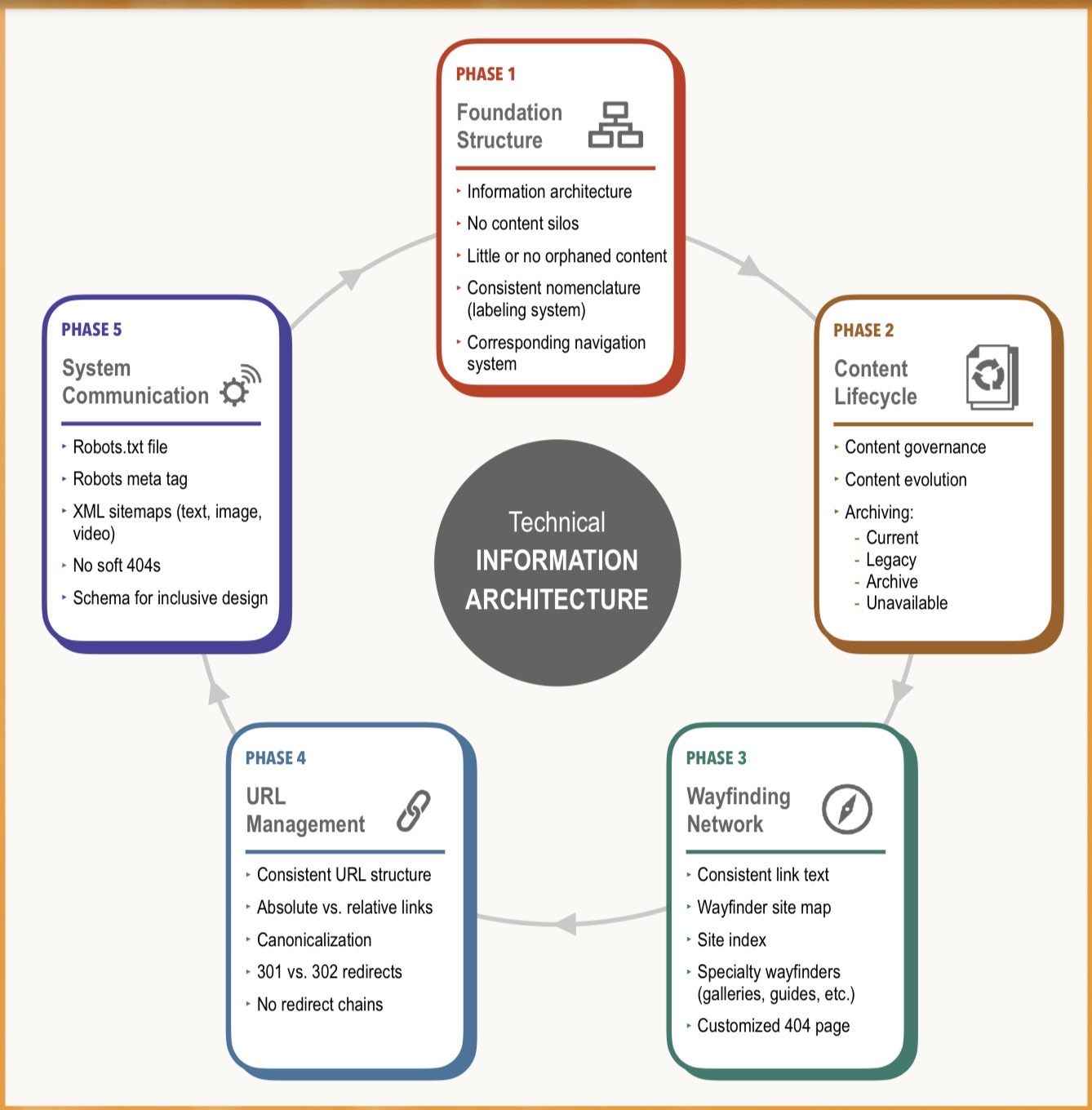
We are on our way to Philadelphia where we will present our poster, “Information Architecture for Inclusion: Breaking Down Technical Barriers,” at the 27th Information Architecture Conference.
Technical information architecture (IA) is how IA decisions are implemented in practice, communicating consistently to both human users and the technologies they depend on. When technical IA components send contradictory signals, content becomes inaccessible and less trustworthy. For example, a page listed in an XML sitemap but blocked in robots.txt sends one message to a search engine, screen reader, or AI system — and then immediately contradicts it. This contradiction — not the content itself — is the barrier. Effective technical IA does not operate independently — it is the implementation layer that gives human-centered IA decisions their real-world consequence. When technical IA sends contradictory signals, AI systems either cannot interpret content correctly or produce biased and incomplete outputs.
This poster presents a five-phase framework for consistent technical IA communication across foundation structure, URLmanagement, wayfinding network, content lifecycle, and system communication. Using a case study from a user identity website, we demonstrate how contradictory technical signals create access barriers that disproportionately harm people with disabilities, older adults, and multilingual users. A practitioner-ready technical IA checklist operationalizes the framework for immediate application across any sector
If you are at IAC26 this year, come visit our booth this Saturday at Poster Night!